Why a Brake Pedal Feels Soft or Spongy
QUICK ANSWER: Press the brake and get more travel than resistance? Something is interfering with the hydraulic pressure your brake system runs on. The usual suspects are air trapped in the lines, brake fluid that has absorbed moisture and started to boil under heat, a worn master cylinder seal, or a leak somewhere in the lines, calipers, or wheel cylinders. Any one of these can turn a firm pedal into one that sinks toward the floor. None of them fix themselves.
You know the feeling the first time it happens. You press the brake and it just... keeps going. Instead of a firm push back against your foot, the pedal sinks lower than it should, and maybe you find yourself pumping it once or twice to get real stopping power. That's a soft or spongy brake pedal, and it's one of the more important warnings your car can give you.
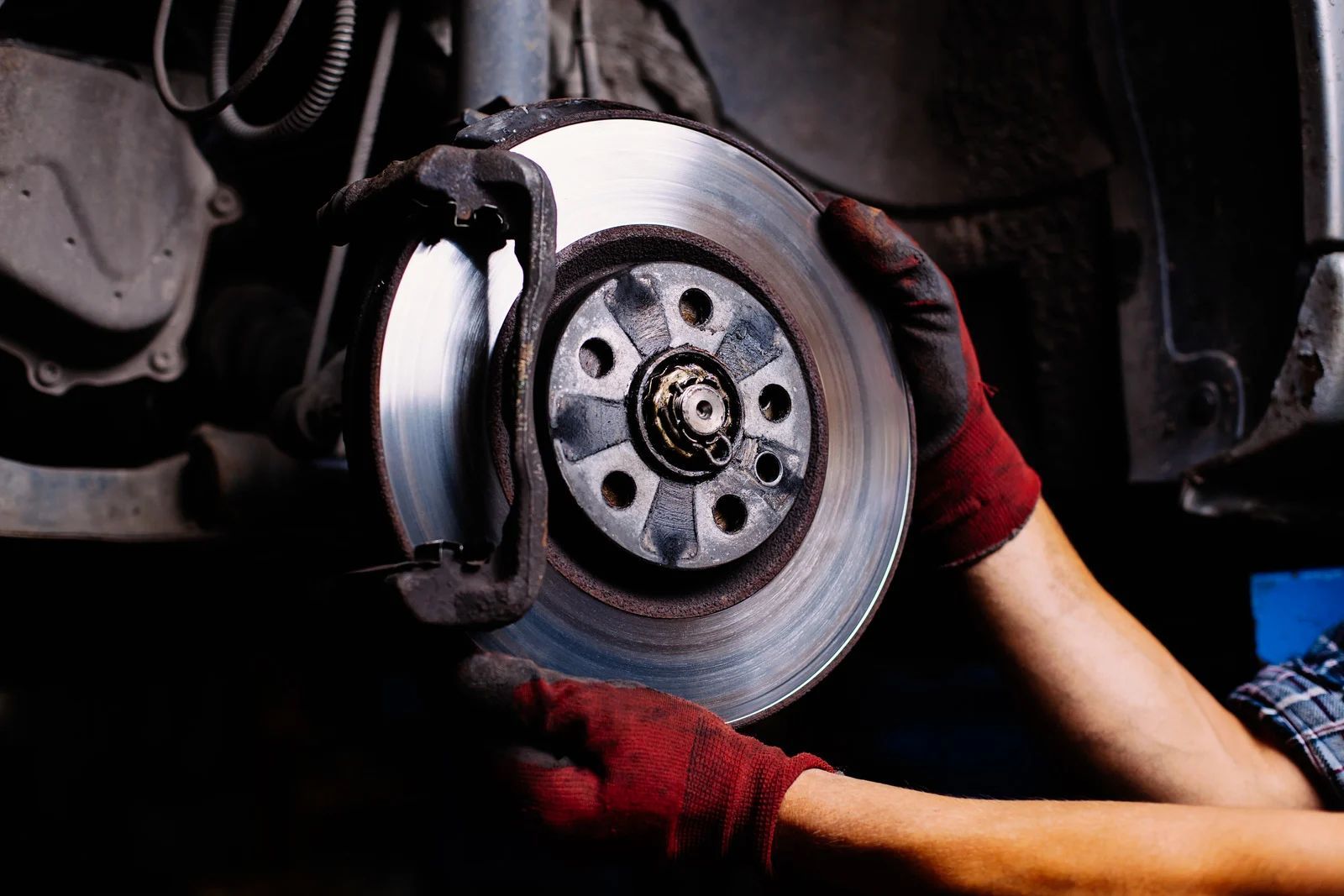
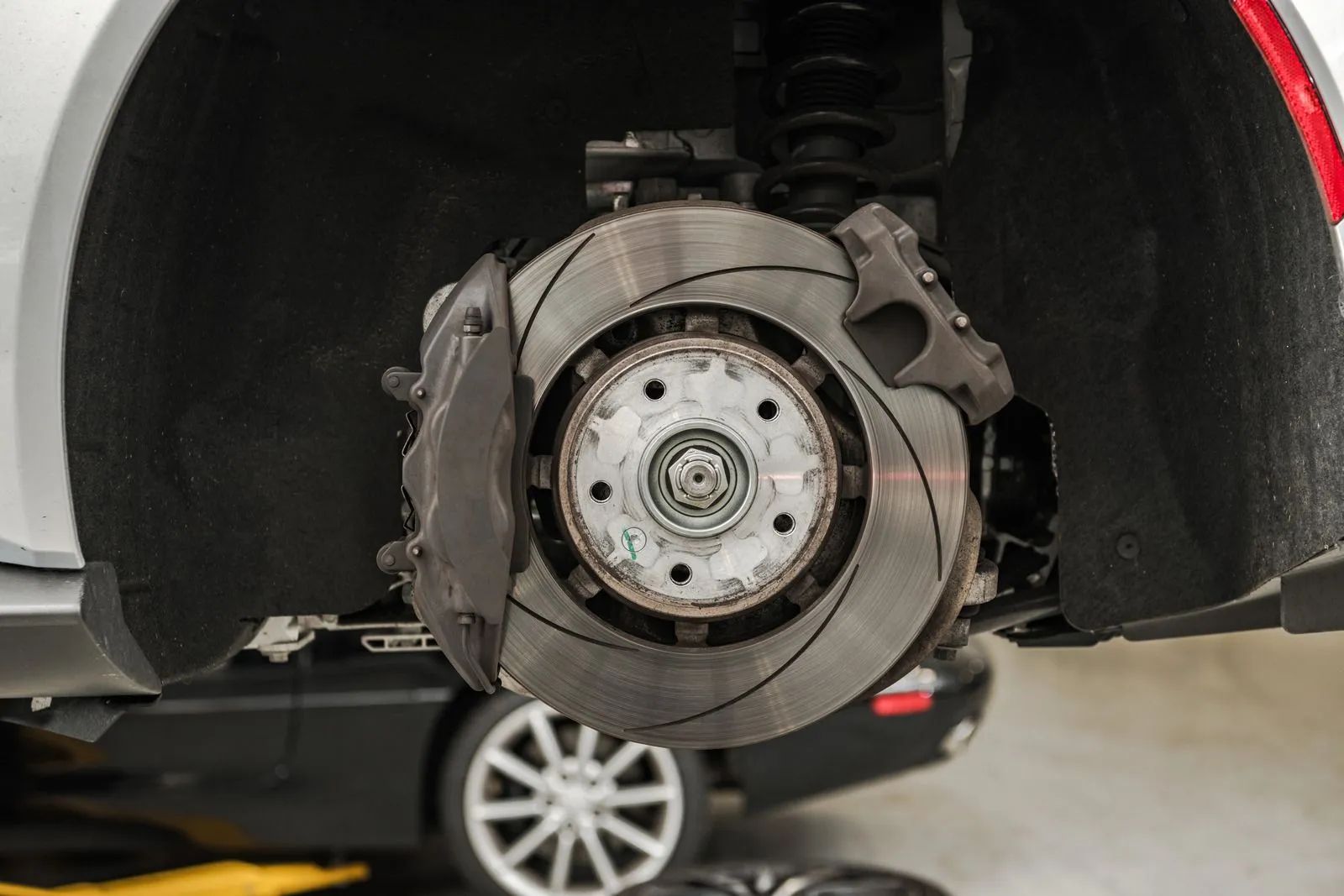
Here's the mechanism behind it. Braking systems run on hydraulic pressure. Press the pedal, and you're pushing brake fluid through a sealed network of lines and hoses that transmits force straight to the calipers or wheel cylinders at each wheel. The whole thing works because fluid doesn't compress. Push it at one end, it pushes back at the other end almost instantly. A spongy pedal means that chain of force has broken down somewhere, and there are only a handful of places it can break.
Air in the Brake Lines
This is the most common cause of a soft pedal by a wide margin. Brake fluid is nearly incompressible by design. That's the entire point of it. Air compresses easily. So if even a small pocket gets into the lines, some of the force from your foot squeezes that bubble instead of moving fluid to the brakes. The pedal ends up feeling mushy, and it travels farther than it should before you get real braking response.
Air sneaks in more than one way. Old rubber hoses can turn slightly porous and let it seep through. A fluid or brake service done without a proper bleed afterward can trap it. And it can form right there inside the lines when the fluid itself gets hot enough to boil, releasing gas bubbles in a system that was never built to hold any gas at all. Once air gets in, it doesn't work its way back out on its own. The fix is bleeding the brakes: pushing fresh fluid through each line until only liquid remains.
Brake Fluid That's Overdue for a Change
Brake fluid behaves differently than most fluids under your hood. It's hygroscopic, meaning it actively pulls moisture out of the air over time, even sealed inside a closed system. That moisture causes two separate headaches. It lowers the fluid's boiling point, so fluid that's been in service a few years can start boiling at temperatures it used to shrug off without issue. Boiling fluid creates the same gas bubbles as trapped air, and the pedal feels exactly the same either way. Moisture-laden fluid is also more corrosive to the metal it touches, which quietly sets up the kind of internal corrosion that leads to leaks down the line.
TIP: Brake fluid absorbs moisture whether you're driving hard every day or the car mostly sits in the driveway. A periodic fluid flush isn't a fix reserved for cars with problems. It's routine maintenance that keeps the pedal firm and protects the metal lines and cylinders from corrosion over time.
Out here in the High Desert, that moisture problem gets a boost from the heat. Summer pavement temperatures run well past whatever the forecast says the air is doing, and long descents off the mountain grades toward Big Bear or Wrightwood put sustained, heavy demand on the braking system the whole way down. Riding the brakes on a long downhill pull builds a lot of heat at the calipers and rotors, and that heat works its way into the fluid inside the lines. Fluid that's already carrying moisture reaches its boiling point a lot faster than fluid that's fresh.
Master Cylinder Wear
The master cylinder is what actually turns the force of your foot into hydraulic pressure. Inside it, a piston moves through a bore, pushed along by the brake pedal linkage, and seals around that piston keep fluid moving forward instead of leaking backward past it. Those seals wear out gradually over years of use. Once they do, some of the fluid you're trying to push toward the wheels slips past the piston internally instead. You still feel yourself pressing the pedal. A chunk of that pressure just never makes it to the brakes.
This kind of internal leak is sneaky. It rarely shows up as a puddle anywhere. No drip under the car, no wet spot on the garage floor. The fluid isn't escaping the system; it's leaking from one side of the piston to the other, inside a part that looks completely normal on the outside. That's exactly why a spongy pedal calls for an actual technician's inspection rather than a walk around the driveway looking for stains.
Leaks in Lines, Calipers, or Wheel Cylinders
Brake lines are steel tubing running the length of the vehicle, and steel corrodes over time, especially with road grit and moisture working against it. A pinhole leak anywhere along a line will slowly bleed pressure out of the system. Because those lines run under real pressure, even a tiny opening can lose a surprising amount of fluid fast. The seals inside disc brake calipers and drum brake wheel cylinders face the same fate. Both rely on rubber seals around a piston, and those seals degrade with age and heat cycling.
A leak anywhere in the system produces the same basic result: less fluid available to build pressure, so the pedal sinks lower before it engages. A big enough leak might also pull the vehicle to one side under braking, since one wheel is suddenly getting less clamping force than the rest. Any confirmed fluid leak means stop driving and get it fixed, not top it off and keep an eye on it. Brake fluid doesn't replenish itself, and the leak won't seal on its own.
WARNING: If your brake pedal sinks all the way toward the floor under steady pressure, or you need more than one pump to get stopping power, don't treat that as something to monitor. Pull over safely and get the vehicle inspected before driving it any farther. A pedal that's spongy today can turn into a pedal with almost no stopping power tomorrow, sometimes with barely any warning in between.
Rear Brake Shoe Adjustment
Not every soft-pedal complaint traces back to fluid or hydraulics at all. Vehicles with rear drum brakes need those shoes adjusted periodically as they wear down. Fall out of adjustment, and there's more empty space between shoe and drum than there should be, meaning the pedal has to travel farther before the shoes even make contact. Drivers sometimes notice a pedal that feels low on the first press but firms up once they pump it. That's a sign this is mechanical adjustment, not a hydraulic fault. Using the parking brake regularly actually helps here, since engaging it triggers an automatic adjustment on many drum setups. Let the parking brake sit unused for months, and that adjustment can fall behind normal wear.
ABS Complications
Vehicles with anti-lock braking systems carry one more hydraulic component in the mix: the ABS modulator, packed with its own internal valves and solenoids that pulse pressure to individual wheels during an ABS event. Corrosion, debris in the fluid, or a failed internal component can keep one of those valves from doing its job right, and the result feels identical to a conventional hydraulic problem even though the cause is electronic. This is exactly why chasing a spongy pedal by guesswork rarely works. The fix for a failed ABS modulator looks nothing like the fix for a leaking caliper, even though both feel the same under your foot.
What a Diagnosis Actually Involves
So many different parts can cause the exact same symptom that finding the real cause takes a systematic inspection, not a single test. A technician starts by checking fluid level and condition, since low or discolored fluid points toward either a leak or fluid that's absorbed too much moisture over time. From there, the lines, calipers, and wheel cylinders get inspected for wetness, corrosion, or swelling, because a worn rubber hose can let air in without ever leaving a visible drip. The master cylinder gets checked both outside and for the kind of internal bypass that never shows up as a puddle. Drum brakes in the rear get their shoe adjustment verified. And if the pedal is still soft after all of that comes back clean, attention shifts to the ABS hydraulic unit itself.
This layered approach matters because chasing the wrong cause doesn't just waste time. It leaves the real problem sitting there while giving you a false sense that something got fixed. Bleed air out of a system that's actually losing fluid through a caliper seal, and it'll feel fine for a little while, right up until air works its way back in and the pedal goes soft all over again.
Why This Isn't Something to Put Off
A brake pedal is one of the few parts on a vehicle where "still working" and "not working" can be separated by a single stop. A slow oil leak gives you weeks of warning through gradually worsening symptoms. A hydraulic brake fault doesn't play by those rules. It can go from "feels a little soft" to "pedal goes to the floor" with barely any notice in between, especially when the underlying cause is a leak that's actively getting worse. Modern vehicles build in a dual-circuit design, with separate hydraulic paths for front and rear brakes, and that redundancy offers real protection if one circuit fails outright. But it exists to get you stopped safely in an emergency. It's not a reason to keep driving around on a pedal you already know feels wrong.
Mountain grades raise the stakes further. Descending toward Lake Arrowhead or through the passes near Wrightwood puts sustained, continuous load on the brakes in a way flat-desert driving around Hesperia and Victorville just doesn't. A soft pedal that's merely annoying on level roads turns into a real hazard on a long downhill stretch, where you're counting on full-strength stopping power for miles at a stretch, not just for one quick stop at a light.
Frequently Asked Questions
Does pumping the brake pedal fix a soft brake?
No, not really. It can restore temporary pressure, especially with trapped air or an out-of-adjustment drum brake, but that's a stopgap. If pumping brings the pedal back, tell your technician exactly that. It's useful diagnostic information, not proof the problem is solved.
Can a soft pedal develop gradually instead of all at once?
Yes. Moisture building up in aging fluid and slow-developing leaks both tend to produce a pedal that gets softer over weeks or months rather than overnight, which is exactly why subtle changes in pedal feel deserve attention too.
Is a spongy pedal always about the fluid?
No. Fluid and air issues cause it most often, but drum brake adjustment and ABS hydraulic faults can produce a nearly identical feeling with zero fluid loss involved. Feel alone can't tell you which one you've got.
Should I keep driving if the pedal only feels a little soft?
Get it checked promptly regardless. A slightly soft pedal today can be a much softer one next week, particularly if an active leak or moisture-saturated fluid is behind it.
Understanding What a Soft Brake Pedal Really Means
A pedal that sinks or feels mushy stops being a mystery once the system gets inspected properly. Air in the lines, moisture-saturated fluid, a worn master cylinder seal, a hidden leak, rear shoes out of adjustment, or a failing ABS valve all produce nearly the same sensation underfoot, which is why feel alone never settles the question. What separates them is what an inspection reveals, and that distinction decides whether a repair actually holds or just quiets the symptom for a few weeks.
Drivers around Hesperia, CA deal with sustained heat, long mountain grades, and desert grit that work brake fluid and hydraulic components harder than mild, flat-road driving ever would. Those conditions are precisely why a change in pedal feel deserves attention early rather than after it worsens. Bear Valley Auto Center
has spent 50
years servicing vehicles in this environment, and that experience shows in how methodically a soft pedal gets traced back to its real source instead of guessed at.