Why Your Brakes Squeal, Grind, or Squeak — and What Each Sound Means
QUICK ANSWER: Brake noise usually falls into three groups. A steady high-pitched squeal most often means a built-in wear indicator is touching the rotor because your pads are worn thin. A rough grinding means the friction material is gone and metal is contacting the rotor, which damages parts fast. A squeak that fades after a few stops is usually just overnight moisture, rust film, or trapped dust. Any new squeal, grind, or braking vibration is a reason to have the pads, rotors, fluid, and hardware inspected.
You pull up to a red light on Main Street in Hesperia, press the brake pedal, and a thin metal squeal cuts through the cabin. Maybe it only happens on the first stop of a cold morning. Maybe it's a low grinding that you feel in the pedal as much as you hear it. Either way, your brakes are talking, and the sound they make tells you a lot about what's happening between the pads and the rotors.
Brake noise falls into a few distinct groups, and each one points to a different cause. A high squeal usually means something separate from a rough grind. A squeak that fades after a few stops is not the same as one that shows up every single time you slow down. Learning to read these sounds helps you catch a small problem while it's still small, instead of paying for a bigger one later.
The High-Pitched Squeal Is Often the Wear Indicator Doing Its Job
Most factory brake pads come with a built-in warning device called a wear indicator. It's a thin metal tab attached to the side of the pad. The friction material on the pad slowly wears down every time you brake, and once that material gets thin — around 2 millimeters of thickness left — the metal tab starts to touch the spinning rotor. That contact makes a sharp, high-pitched squeal.
It's built to get your attention
The squeal is designed to cut through road and engine noise so you hear it from the driver's seat. It isn't strong enough to damage the rotor on its own, but it is loud enough to be annoying, and that's the point. The sound means your pads have worn down to the last stretch of their service life and a replacement is coming due.
Newer vehicles may warn you differently
Instead of a metal tab, many modern cars use an electronic wear sensor embedded in the pad. When the pad wears past a set point, the sensor breaks or completes a circuit and lights up a warning on your dashboard. If a brake light shows up on your cluster, treat it the same way you'd treat a squeal and get the pads checked soon.
Squeaks That Come and Go Usually Have a Simpler Cause
Not every squeak means worn-out pads. Some noises show up for reasons that have nothing to do with pad thickness, and a few of them clear on their own after a stop or two.
Overnight moisture is a common one
Park outside after a rain or through a cold High Desert night, and a light film of dew or surface rust forms on the rotors. The first few times you brake the next morning, the pads scrape that film off and you hear a squeak. Once the rotor face is clean again, the sound usually goes away.
Dust and grit are a bigger deal out here
The Victor Valley kicks up a lot of fine dust, and that grit works its way between the pad and the rotor. Trapped debris can chirp or squeak under braking, and heavy buildup can score the rotor surface over time. Drivers who spend time on dirt roads and open desert routes around Adelanto, Oak Hills, and Phelan tend to see this more than someone driving only clean pavement.
Heat can glaze the pads
Ride the brakes down a long grade — coming off the mountain from Big Bear or Wrightwood, or dropping through Cajon Pass toward the valley — and the pad surface can get hot enough to harden and glaze. A glazed pad is smooth and shiny instead of grippy, and it often squeals against the rotor. Certain pad materials also run noisier than others by nature, even when everything is working the way it should.
TIP: On long mountain descents, shift into a lower gear and let the engine help slow the vehicle instead of holding the brake pedal down the whole way. Steady, hard braking on a downhill grade builds heat fast, and that heat is what glazes pads and warps rotors.
Grinding Is a Different Warning, and It Means Stop Waiting
A grind is not a squeak. When you hear a rough, metallic grinding — often with a scraping feel through the pedal — it usually means the friction material on the pad is gone and the metal backing plate is now pressing directly against the rotor. That's metal on metal, and it does real damage every time you brake.
The rotor pays the price
Once the pad backing is grinding on the rotor, it cuts grooves into the rotor face. A rotor that might have only needed resurfacing can wear to the point where it has to be replaced. The longer the grinding goes on, the more the repair spreads from a simple pad change to rotors, and sometimes to the calipers that hold everything together.
Stopping power drops with it
Worn pads don't bite the way fresh ones do. If you notice the car taking longer to stop, or you find yourself braking earlier for the same red light you always stop at, the pads have lost their grip. Grinding paired with longer stopping distances is a combination worth acting on quickly
WARNING: Never keep driving on brakes that grind metal-on-metal. Beyond the damage piling up on the rotors and calipers, worn-out pads stretch your stopping distance right when you need it most — on a busy stretch of Bear Valley Road or coming down a mountain grade with a loaded vehicle.
Squeal, Grind, or Pulsation: Telling the Sounds Apart
Putting a name to the noise helps you and a technician zero in on the cause faster.
A steady high squeal on most stops points to worn pads and the wear indicator, or to glazed pads and pad material. This is the get-it-inspected-soon sound.
An intermittent squeak that fades after the first few stops of the day usually traces back to moisture, rust film, or trapped dust. Keep an ear on it, but it's often the least urgent.
A rough grinding or scraping signals pads worn past their material, with metal contacting the rotor. This is the don't-wait sound.
A rhythmic pulsing or vibration
you feel in the pedal or steering wheel while braking usually isn't a pad-thickness problem at all. It often means a rotor is uneven or warped, or that pad material has deposited unevenly on the rotor face. Heat and hard braking, common on hilly routes and in stop-and-go traffic, are frequent culprits.
Why High Desert and Mountain Driving Are Hard on Brakes
Brakes work by turning motion into heat, and the conditions around the Victor Valley pile on more heat and wear than gentle city driving does.
Heat is constant
Summer temperatures on the High Desert floor push brake components hard before you ever touch a mountain grade. Add a long descent from Wrightwood or Big Bear, where you're braking against gravity for miles, and the whole system runs hot. High heat is what glazes pads, boils neglected brake fluid, and warps rotors.
Dust never really lets up
Fine grit is part of daily life here, and it finds its way into the brake hardware. It speeds up pad and rotor wear and adds to the squeaks and chirps drivers notice.
Stop-and-go adds up
Running errands across Hesperia, Victorville, and Apple Valley means a lot of light-to-moderate stops, and each one feeds a little heat and wear into the pads. None of it is dramatic on its own, but the toll adds up faster than the odometer suggests.
What a Brake Inspection Actually Checks
When brake noise brings you in, a proper inspection looks at the whole system rather than swapping one part and hoping the sound stops.
Pads and rotors first
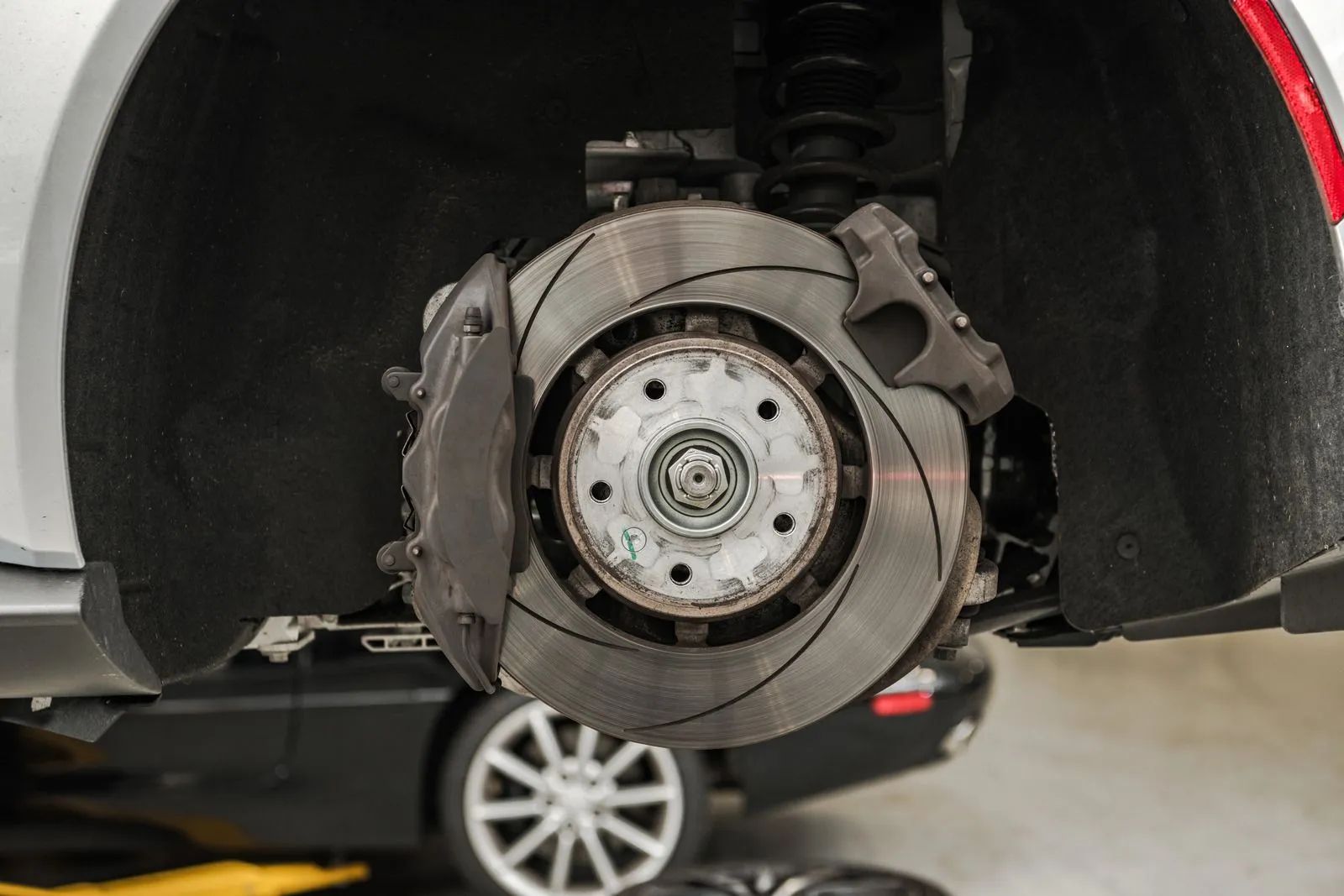
A technician measures the remaining pad thickness and checks the rotor faces for grooves, warping, and uneven wear. Rotors that are still within spec can sometimes be resurfaced; badly scored or thin ones get replaced. Pads are replaced per axle so both sides brake evenly.
Fluid and hydraulics
Brake fluid absorbs moisture over time, which lowers its boiling point and softens the pedal. A fluid flush restores a firm pedal and helps the system handle the heat of desert and mountain driving.
Calipers and hardware
A sticking caliper can drag a pad against the rotor, creating heat, uneven wear, and noise even when the pads still have life left. Checking caliper movement, slides, and mounting hardware catches problems that a simple pad swap would miss.
The ABS side
If a wheel-speed sensor or the anti-lock system flags a fault, that gets scanned and diagnosed too, since it ties directly into how the vehicle behaves in a hard stop.
Frequently Asked Questions
Why do my brakes squeal in the morning but stop after a few stops?
Overnight moisture and surface rust on the rotors are the usual cause, especially after a cold or damp High Desert night. The first few stops scrape that film off. A squeal that sticks around all day points more toward worn pads.
Is it safe to drive with squealing brakes?
A light, occasional squeak from morning moisture or dust is usually low risk. A steady, high-pitched squeal often means the wear indicator is signaling worn pads. Short trips are fine, but don't put off getting them checked before they grind.
What does it mean when my brakes grind?
Grinding usually means the friction material is worn away and the metal backing is contacting the rotor directly. That metal-on-metal contact damages the rotor with every stop and lengthens stopping distance. Grinding is a stop-waiting situation that only worsens with time.
Why do my brakes squeal even though the pads look okay?
Glazed pads, certain pad materials, trapped desert dust, or a light coat of rust can all cause squeal even when thickness looks fine. Heat from long mountain descents can harden the pad surface. A technician can tell glazing apart from true wear.
Why do I feel a vibration or pulsing when I brake?
A pulsing felt in the pedal or steering wheel usually points to an uneven or warped rotor, or pad material deposited unevenly on the rotor face. Heat and hard braking on hilly routes are frequent causes, needing the rotors measured and addressed.
How often should I have my brakes inspected out here?
Frequent stop-and-go driving, dusty conditions, and mountain descents speed up brake wear, so High Desert drivers benefit from checks during routine maintenance and tire rotations. Any new squeal, grind, or vibration is reason to have them looked at sooner.
Reading the Sound Before It Costs You a Rotor
Brake noise is one of the few warnings your car gives you before a small fix turns into a large one. A squeak on a damp morning is rarely urgent. A steady squeal on most stops means the pads are near the end. A grind means the pads are gone and the rotors are taking the hit. Once you can tell those sounds apart, you know how fast you need to act, and you spare yourself the surprise of a caliper or rotor repair that started as a simple set of pads.
That early warning is only useful if someone reads it correctly and catches the problem while it's still small. A squeal caught in time means a straightforward pad replacement, while the same noise ignored for months can mean grooved rotors, a seized caliper, or worse. Based in Hesperia, California, Bear Valley Auto Center
has spent 50
years listening to exactly these sounds, learning to tell a harmless morning squeak from a warning that needs same-week attention. Understood this way,
brake noise
isn't a background annoyance; it's your car's clearest signal, one that rewards a driver who knows how to listen before the repair grows.